
A wet floor beside the water heater is a call we hear about constantly, and the first question is always the same: where is it actually coming from? Water runs downhill and pools at the lowest point, so the puddle is often nowhere near the source. It might be the temperature and pressure relief valve or its discharge line, the drain valve near the bottom of the tank, the inlet and outlet fittings on top, condensation on a cold tank, or a nearby pipe that has nothing to do with the heater. It might also be the tank itself, and that answer changes everything. In The Villages, FL, we start every leak call by finding the true source.
Finding the source takes a few careful steps. We clear and dry the area, then watch where new water appears. The relief valve and its discharge pipe get checked first, followed by the drain valve and the inlet and outlet fittings, where dielectric unions and flex connectors tend to corrode. If the heater is gas-fired, we look inside the burner compartment, since water there can be condensation or a sign the tank has given out. When the relief valve is involved, we measure water pressure and check whether expansion has anywhere to go. Every recommendation is based on what we find.
The repair depends on the diagnosis. Valve and fitting leaks are the good news: relief valves, drain valves, dielectric nipples, and flex connectors ride on our trucks, and we can often add an expansion tank or pressure-reducing valve the same day if pressure caused the problem. A leak from the tank body is the bad news, because steel that has rusted through cannot be repaired, and we will say so rather than sell a patch. Either way, we help limit future damage with a properly drained pan, a leak alarm or automatic shutoff, and a quick lesson on your shutoff valve. The Villages homeowners can reach us at (352) 218-9877.
Most of our service calls are for Water Heater Repair in The Villages and Water Heater Replacement in The Villages. Start there if you're not sure what you need.
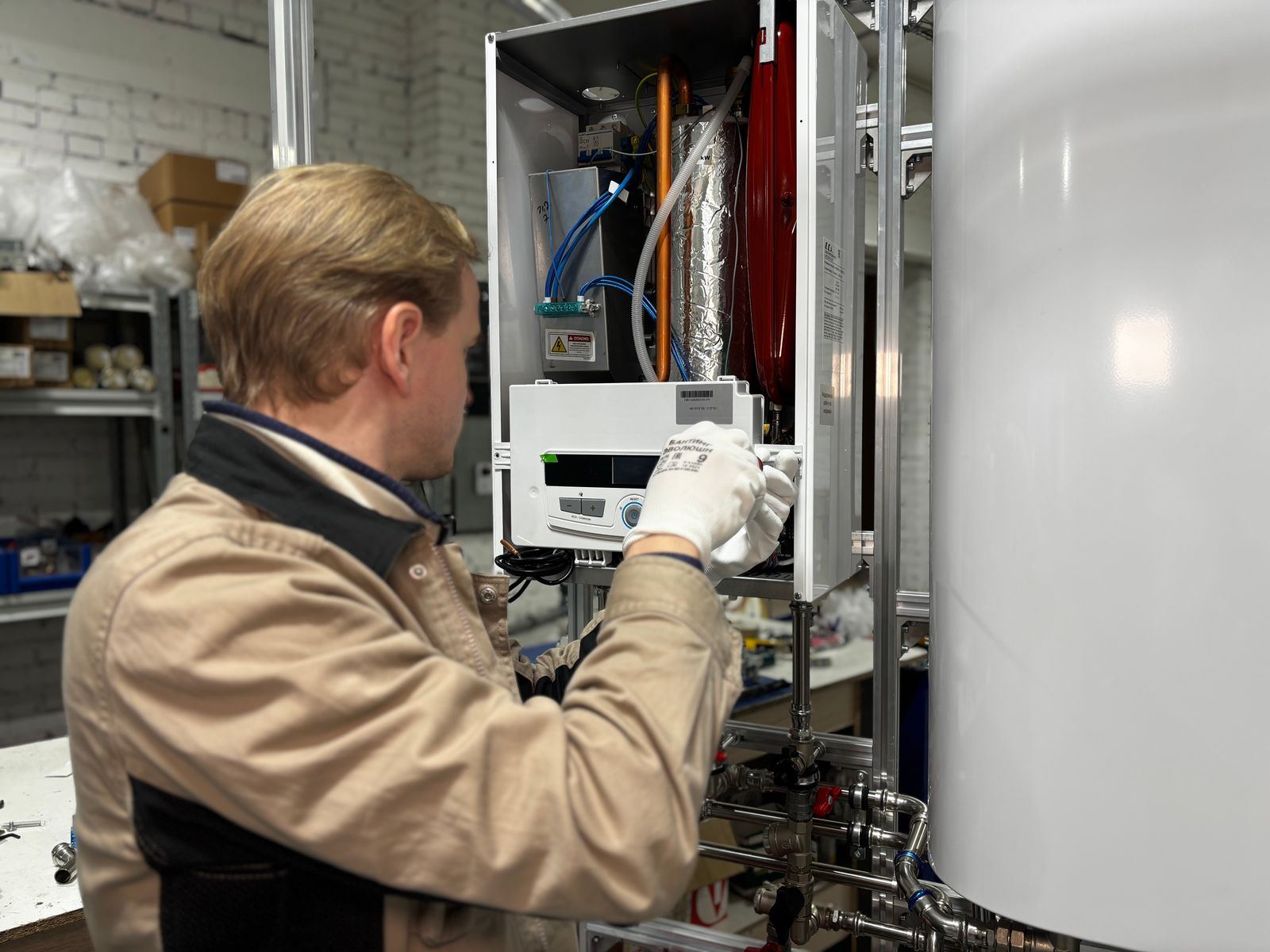
Signs You Need Water Heater Leak Repair in The Villages
Recognizing the warning signs early can save you money and keep a slow drip from turning into a flooded utility room. Keep an eye out for the following:
- A musty odor or soft floor around the heater location
- Moisture or mineral crust at the end of the relief valve pipe
- A puddle or damp spot on the floor around the base of the tank
- Dampness in the combustion area of a gas unit
- Rusty or discolored hot water paired with dampness at the base
- A drain valve at the bottom of the tank that drips even when closed
- Higher water use with no obvious explanation
- Rust, green corrosion, or white crust on the fittings at the top of the tank
Act Before It Gets Worse
A little rust-colored water or a relief valve that drips now and then can be the first hint of a tank that is close to the end. At the first hint of a problem, reach out to The Villages Water Heater at (352) 218-9877 and we'll take a look.
Talk to Us About Water Heater Leak Repair
Call our team for pricing today.
Call (352) 218-9877 TodayWater Heater Leak Repair FAQ
Why Hire a Professional for Water Heater Leak Repair?
Water heater leaks are easy to misread. Water pooling at the base may start at a fitting on top and run down the jacket, and condensation on a cold tank can pass for a failing tank. Buying the wrong part is money down the drain, and missing a failing tank can lead to a much bigger flood later. Safety is part of the picture as well. The relief valve guards the tank against runaway heat and pressure, and capping or plugging it to stop a drip can set up a violent failure. Tightening corroded fittings on an old tank can crack them, and electric models run on 240-volt power that do not mix well with wet floors.
Calling a professional buys you certainty. We find the actual source, fix it with the right parts, and look for the reason it failed. When a relief valve drips, pressure and expansion get tested. When a fitting is rotten, the connection gets replaced, not cranked tighter. When condensation is the only issue, you hear that, and you keep your money. And when the tank itself is leaking, we recommend replacement honestly, with a drain pan, drain line, and leak alarm to limit damage the next time around.
What to Expect From Our Team
Every visit follows a step-by-step method built around testing first and replacing parts only when the readings call for it. Here's how we handle water heater leak repair from start to finish:
Isolate the Leak
Before diagnosing, we isolate the heater, turn off the energy source, and contain any standing water so floors and walls stop soaking it up.
Pinpoint the Leak
With the surfaces dried, fresh water shows us where the leak begins, whether that is a valve, a fitting, condensation, or the tank wall.
Test the Pressure
If a relief valve is involved, we measure static pressure and check for an expansion tank, since high pressure will ruin a new valve fast.
Lasting Repair
Repairs are tested, not assumed. We restore water and heat, check each joint, and suggest a drain pan or leak sensor where it would help. If the tank has failed, you get straight replacement options.
Want a Professional Opinion?
Our technicians can assess your water heater and recommend the option that actually makes sense.
Call (352) 218-9877 TodayWater Heater Care Tips From Our Technicians
Most of the failures we see could have been delayed for years with basic upkeep. Follow these tips from our technicians:
- Flush the tank once a year so sediment does not overheat the bottom and speed corrosion
- Place the heater in a drain pan with a line to a floor drain or outdoors, especially above finished space
- Have the anode rod checked every few years; once it is used up, the tank starts to corrode
- Ask about expansion control if your home has a check valve or backflow preventer
- High street pressure is hard on water heaters, so a pressure test and regulator can prevent repeat drips
- Put a water leak sensor on the floor next to the tank so a drip gets noticed early
- Make a habit of checking around the heater for moisture or corrosion every few weeks
DIY vs. Professional Water Heater Leak Repair
The line between a safe DIY check and a risky repair is usually the moment you need to open a gas fitting, a vent connection, or an electrical cover. Here's a comparison:
| Consideration | Doing It Yourself | Hiring a Pro |
|---|---|---|
| Finding the Source | Guess based on where water collects | Leak traced to its true starting point |
| Relief Valve | Valve capped to stop the drip, a serious hazard | Pressure and expansion tested, valve replaced properly |
| Old Fittings | Wrapped in tape and hoped for the best | Dielectric unions and connectors rebuilt |
| False Alarms | Normal sweating treated as a leak | Condensation identified before money is spent |
| Protecting the Home | Damage prevention skipped | Drain pan, drain line, and leak sensor options |
| Result | Drip returns in weeks | Leak solved and cause corrected |
Get Water Heater Leak Repair Help Today
The sooner you call, the sooner the hot water is back. Reach The Villages Water Heater for fast service.
Call (352) 218-9877 TodayWhere We Provide Water Heater Leak Repair
Wherever you are in the area, the same experienced team shows up with the same parts and the same pricing. Find your community below.